
Convallaria majalis (Lily of the Valley): Meaning, Symbolism, and Botanical Facts
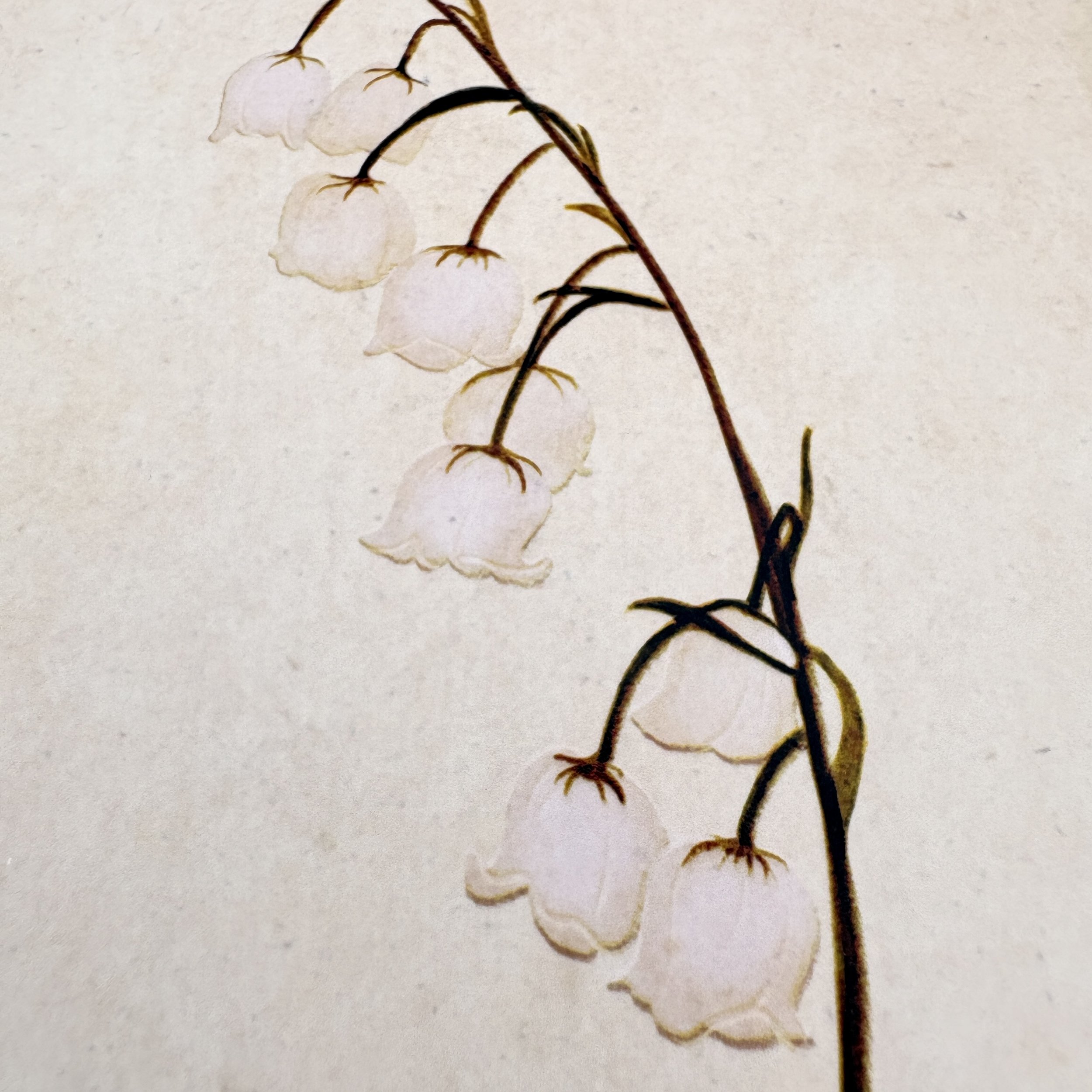
Quick Facts
Scientific Name: Convallaria majalis
Common Name: Lily of the Valley
Family: Asparagaceae
Native Range: Europe and parts of Asia
Bloom Time: Spring
Growth Habit: Rhizomatous perennial (spreads underground)
Toxicity: Highly toxic (cardiac glycosides)
Symbolism: Duality, rebirth, cycles, resilience
Botanical Description
Convallaria majalis does not grow in isolation. It spreads underground, weaving unseen networks of roots before it blooms in spring. Known for its tinkerbell-shaped blossoms, it often thrives in what’s considered “poor” soil (silty or sandy ground with low nutrient content).
Though beautiful and delicate in appearance, every part of this plant contains concentrated cardiac glycosides chemicals that, if ingested, can cause sudden cardiac arrest. Native to Europe, it notably avoids the Mediterranean and Atlantic coasts.
Symbolism and Reflection
One legend claims the flower was discovered by Apollo, the Greek god associated not only with music and light, but also with the laurel and cypress, symbols of justice and death.
Lily of the Valley is a symbol of duality: beauty and poison, death and rebirth, unity and cycles. Whatever you're facing right now may feel like the end. But as reflected in Norse, Hopi, Hindu, and even Christian mythology, the end is never truly the end. It is the unraveling of one world and the slow weaving of another. The old gods give rise to the new, the new gods fall, and the old gods return. From ruin, we build again, bringing with us the memory of what came before in hopes that this time, we do better.
This is not just an ancient theme; it is the pattern of life itself. What dies is not lost, but refined.
Alchemists call this rubedo: the final stage of transformation, following decomposition and purification. What remains is the essence of what makes it whole. We may try to resist destruction, but no amount of resistance will stop this cycle once it’s begun.
That’s a hard truth that gives birth to our values: hope, faith, resistance, ethics. These things didn’t fall from the sky like manna. They were forged in suffering, born of the human instinct to preserve what matters: love, joy, family, prosperity and life itself. Even as the world unravels, you can still carve out beauty and meaning. Joy is not something we wait for; it’s something we make.
You don’t have to be at peace to plant a garden. You don’t have to fix the world to find joy, and you don’t have to end suffering to live with purpose.