
Wolfsbane (Monkshood) Meaning: Symbolism of Protection, Danger, and Devotion
Quick Facts
Scientific Name: Aconitum
Common Names: Wolfsbane, Monkshood
Family: Ranunculaceae
Native Range: Northern Hemisphere (Europe, Asia, North America)
Toxicity: Highly toxic (contains aconitine)
Bloom Season: Late summer to early fall
Symbolism: Protection, danger, sacrifice, concealed strength, transformation
Botanical Description
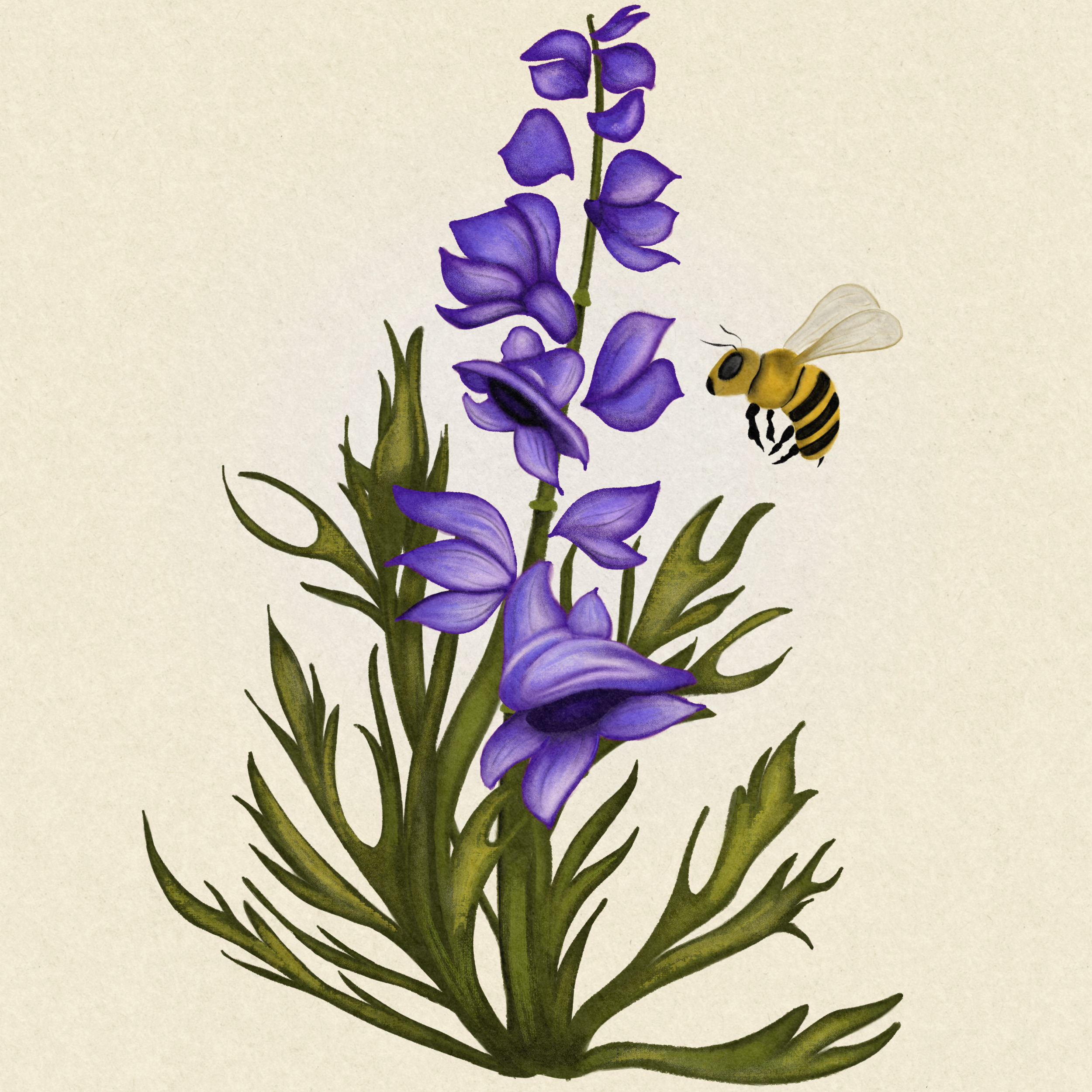
Aconitum, commonly known as Wolfsbane or Monkshood, is a perennial flowering plant recognized for its tall spikes of hooded, deep blue to violet blooms. The unique helmet-shaped flowers give rise to the name “monkshood,” resembling the cowl of a monk.
Despite its beauty, it is one of the most toxic plants in the garden. Its potent alkaloid, aconitine, has historically been used in hunting, warfare, and even assassinations. Thriving in cool, mountainous regions, Aconitum prefers moist, well-drained soil and partial shade, quietly existing as both ornamental and ominous.
Symbolism and Reflection
Monkshood, better known as Wolfsbane, is a symbol of chivalry, concealed strength, and sacrificial protection. Monkshood was historically used in assassinations, hunting (e.g., poison arrows), and ritual magic, emphasizing its symbolic ties to danger, death, and boundary-crossing. Beautiful and poisonous (due to the alkaloid aconitine) it is a plant of spiritual protection, secrecy, and shape-shifting.
Associated with Hecate and Persephone, its hooded bloom reflects the masked labor of devotion.
Used in witchcraft, warfare, and folklore to ward off danger or invoke transformation, monkshood reminds us that true power, like love, can be both protective and perilous.
Nurturing is your love language. You are the glue that holds everything together when things fall apart. You do this without hesitation, even when it leaves you feeling overlooked or taken for granted. Be aware: giving can quietly turn into grief when love becomes an obligation, and care becomes the expectation.
The work you do, whether in relationships, home, or community, may go unnoticed on the surface, but your absence would be deeply felt. That is your truth. Move forward knowing that your devotion, even when thankless, creates the space others need to heal, grow, and feel loved. You are the silent shield. Seen or not, you do matter.
Take time for yourself. It’s not selfish to offer yourself the same love and devotion you freely give to others. You need boundaries that protect your energy. It’s okay to say you’re tired and ask for help. Because you give so much, many people will gladly show up for you if you let them. If they don’t, take a step back and ask: are these the relationships you should be pouring yourself into?
People you care deeply for may not feel the same in return and may knowingly take advantage of your giving nature. Let this be a sign to reassess your effort, reclaim your time, and remember: love shouldn’t come at the cost of yourself.