
Taraxacum officinale (Dandelion): Meaning, Symbolism, and Botanical Facts
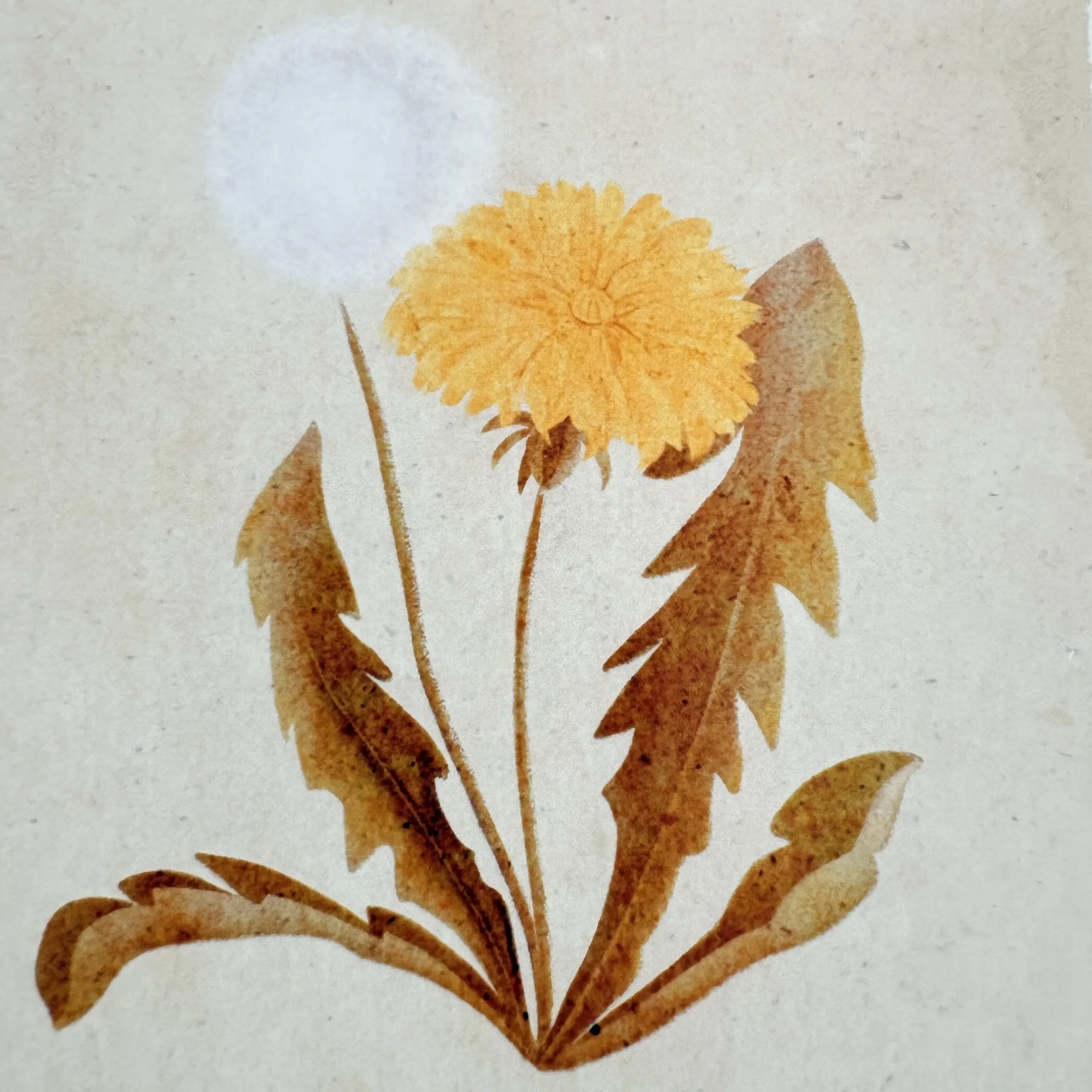
Quick Facts
Scientific Name: Taraxacum officinale
Common Name: Dandelion
Family: Asteraceae
Native Range: Eurasia (now naturalized worldwide)
Bloom Time: Spring through fall
Key Traits: Hardy perennial, deep taproot, bright yellow flowers, wind-dispersed seeds
Uses: Edible plant, medicinal herb, pollinator support, soil enrichment
The dandelion (Taraxacum officinale) has evolved over an estimated 30 million years and has gathered many names throughout history: blowball, witch’s gowan, milk witch, lion’s tooth (from the French dent-de-lion), yellow gowan, swine’s snout, and wet-a-bed—the last referring to its diuretic properties.
Every part of the dandelion:leaves, roots, and flowers, are edible and nutrient-rich, though often bitter in taste. It is a valuable companion plant, known for accumulating minerals like calcium from deep in the soil and making them more accessible to nearby shallow-rooted plants. It is also an important food source for pollinators such as bees and butterflies, and for various wildlife.
Botanically, dandelions reproduce both sexually and asexually, with most garden-variety dandelions reproducing via apomixis, resulting in genetically identical offspring. Medicinally, dandelions are rich in vitamins A, C, and K, and contain iron, calcium, potassium, and manganese.
The leaves are often consumed as a leafy green or brewed into tea for their diuretic and liver detoxifying effects. The roots have been historically used in wines, tonics, and fermented beverages like traditional root beer.
Symbolism and Reflection
Dandelions are most famously associated with wishes: the spherical seed head, or puffball, disperses seeds via wind, and in folklore, blowing the seeds while making a wish was believed to carry one’s hopes or wishes to the gods.
You’ve spent your life devoted to the comfort of others, taking pride in your ability to help, support, and solve problems. Some may even call you a “magic maker” for your uncanny knack for fixing the unfixable.
Without expecting anything in return, people often turn to you for guidance, and you willingly offer your time, energy, and support. But now, you're feeling depleted and it’s time to call your energy back. It’s time to do for yourself what you’ve always done for others.
Find a dandelion puff, close your eyes, and make a wish for yourself. It’s okay to step away from the genie role. Let your magic nurture yourself for a while.