
Daucus carota (Queen Anne’s Lace): Meaning, Symbolism, and Botanical Facts
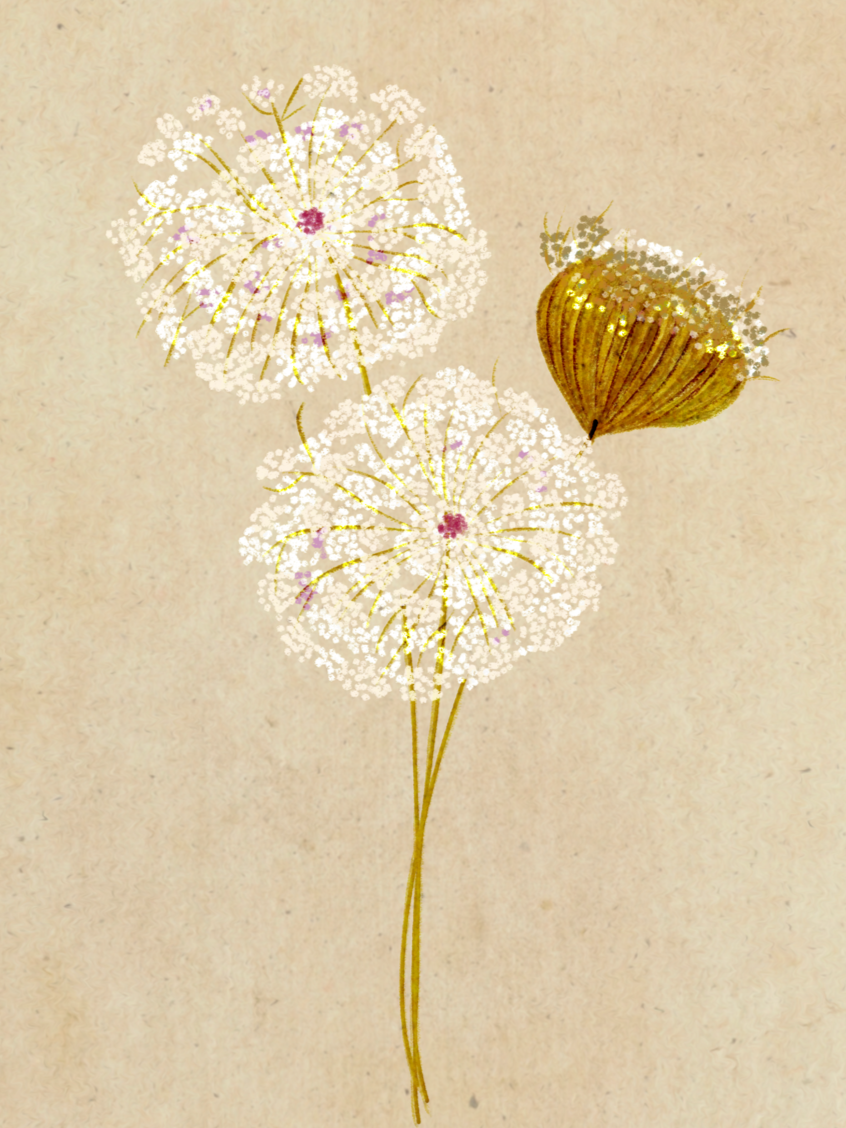
Quick Facts
Scientific Name: Daucus carota
Common Name: Queen Anne’s Lace, Wild Carrot
Family: Apiaceae
Native Range: Europe, Asia, and North Africa (naturalized widely)
Bloom Time: Late spring to early fall
Symbolism: Sanctuary, protection, sacrifice, endurance, wisdom
Botanical Description
Queen Anne’s Lace (Daucus carota) is a wild, flowering plant known for its delicate, umbrella-shaped clusters of tiny white flowers called umbels. Often found in fields, roadsides, and open landscapes, it thrives in disturbed soils and sunny environments.
Its blooms attract pollinators such as butterflies and wasps, while its structure provides shelter for smaller plants and insects beneath it. A distinctive feature is the small, dark floret at the center of many flower heads, often interpreted as an evolutionary adaptation to deter pests.
Beneath the surface, its root is the ancestor of the modern cultivated carrot, offering both nourishment and a connection to its cultivated counterpart.
Symbolism and Reflection
Daucus carota is a sanctuary in the wild. Its delicate umbels draw pollinators like butterflies and wasps, while its structure shelters the plants beneath it. Some say the dark center mimics an insect, deterring pests and protecting what’s vulnerable. Above and below ground, this plant offers refuge and sustenance, sweetness in its roots, and shelter in its blooms. Indeed, it is a sanctuary.
Queen Anne of Great Britain, who reigned in the early 1700s, was a woman both crowned and cursed; charged with uniting kingdoms while enduring the loss of seventeen children. The flower that bears her name, Queen Anne’s Lace (wild carrot), carries a legend just as poignant.
While stitching lace, the queen is said to have pricked her finger, leaving a drop of blood at its center. The flower’s dark red floret tells the tale of sacrifice. Yet, the center tells more than one story. It speaks to a legacy shaped by personal loss, religious division, political upheaval, and familial betrayal.
A story of a woman, at the center of history, reshaping the path ahead through grief, duty, and sacrifice; laying the groundwork for modern Britain through endurance.
You’ve faced many challenges, examined your wounds, and emerged with wisdom, becoming a sanctuary for others. People are drawn to you because your guidance doesn’t come from theory but from truth learned through experience. You may not recognize it, but your insight is a gift that brings comfort, clarity, and healing.
Continue to honor it. There are those who repeat advice from books, and there are those who speak from experience. You are the latter. Let no one tell you otherwise.