
Leontopodium nivale (Edelweiss): Meaning, Symbolism, and Botanical Facts
Quick Facts
Scientific Name: Leontopodium nivale
Common Name: Edelweiss
Family: Asteraceae
Native Range: European Alps and other mountainous regions
Bloom Time: Summer
Growth Habit: Low-growing perennial
Symbolism: Courage, devotion, resilience, remembrance
Botanical Description
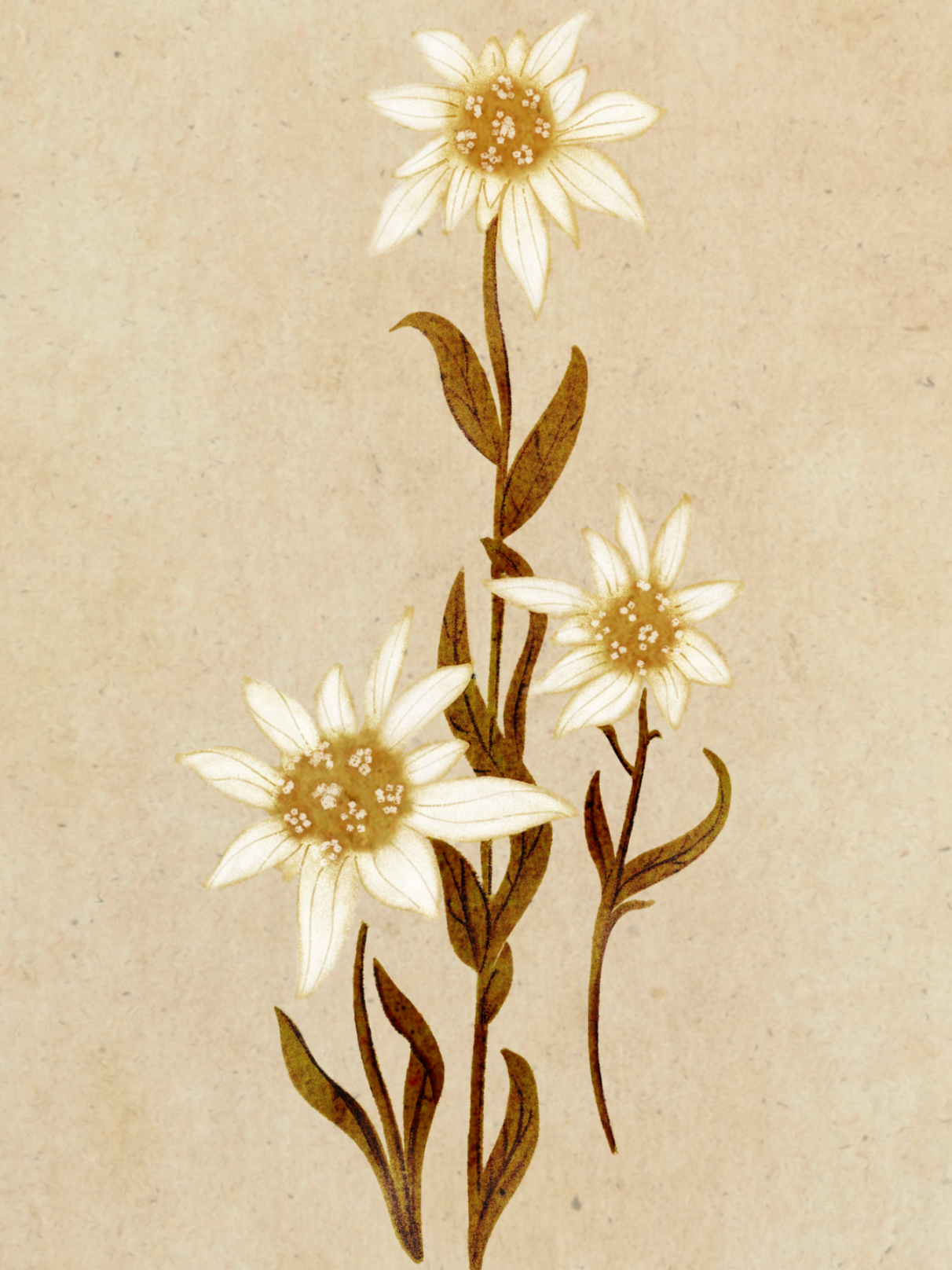
Edelweiss (Leontopodium nivale) is a small, white, and fuzzy flower that grows at high elevations, especially in the Alps. Known as the “alpine star,” it is well adapted to harsh alpine environments, thriving in thin air, rocky soil, and freezing temperatures. Its woolly, star-shaped bracts protect it from cold and intense sunlight, allowing it to survive where few other plants can endure.
Symbolism and Reflection
Edelweiss symbolizes devotion, courage, and the unyielding will to return home.
During World War II, the Edelweiss became an emblem of resistance and remembrance, honoring those who endured displacement, war, and sorrow with dignity. The flower’s name was even adopted by anti-Nazi youth groups who defied fascism, helped defectors escape the Hitler Youth, and sheltered Jewish refugees.
Suffering is an inevitable part of life that sometimes demands we make choices we would rather not make. We are faced with decisions that test our integrity and challenge our moral and ethical compasses. Some sacrifices come at a cost that leaves behind wounds that may never fully heal, and scars that remind us of what we’ve endured.
Like the Edelweiss, which blooms in thin air and freezing temperatures, you have adapted to harsh conditions. Through your suffering, you've become a living testament to resilience, one that draws strength from pain, courage from loss, and still finds space to breathe and grow.
This flower serves as an affirmation: The worst is behind you. Though healing may take time, you have already endured and grown. The path ahead may feel unfamiliar, but you know you can survive it.